

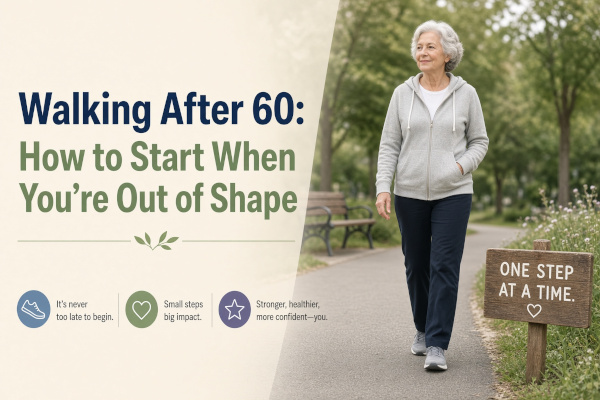
You don’t have to walk a mile to start. You don’t have to feel ready, get in shape first, or buy anything fancy. You need five minutes and a door.
If you’ve been sitting more than you’d like, you’ve probably noticed something strange. The less you move, the more tired you feel. Even the walk to the mailbox starts to feel like work. So you rest more, and then you move even less.
In Walking After 50, Book One, it calls this the tiredness trap. It feels like your body is telling you to rest. What it’s really telling you is that it’s out of practice.
The way out is not a big push. It’s a small, steady start.
Five minutes is a real start
Five minutes is not a weak version of exercise. It’s a real starting point. A walk to the end of the driveway and back counts. A slow lap around the living room on a bad day counts.
Think of it like an old hand pump on a well. The first few pumps don’t bring up much water. They’re just clearing the way. Keep going, and the water comes easier each time. Your body works the same way. The first few short walks clear the way. The energy comes after.
Most people notice a change within one to two weeks. Walks that felt hard start to feel normal, and that all-day tired feeling starts to lift.
Check with your doctor first if…
For most people, easy walking is safe to start. But talk to your doctor before you begin if any of these fit you:
- Heart disease, chest pain, a past heart attack or stroke
- Diabetes that isn’t well controlled
- Recent surgery, especially on your hips, knees, or back
- Dizziness, fainting, or balance problems
- Joint pain that already limits your day
- Several medicines, especially for blood pressure or heart rhythm
- A doctor has told you to limit exercise
If none of those fit, you can likely start this week. Mention your walking plan at your next checkup anyway.
“But what if I fall?”
That’s a fair worry. But skipping walks to avoid a fall has it backward. Regular walking helps keep your legs and balance strong, and that’s what helps prevent falls.
A few simple habits lower the risk:
- Walk in daylight or in well-lit places
- Start on smooth, even ground you know well
- Wear real walking shoes with good grip
- Bring your phone, or tell someone your route
- Use your cane or walker if you have one
That last one matters. Using a cane or walker is not giving up. Plenty of people who use one walk farther, and with more confidence, than people who don’t.
How I’d begin: your first week
Here’s the week-one plan from the book. Notice what’s missing: no step counts, no speed goals, no distance.
| Day | Plan |
|---|---|
| Day 1 | Walk 5 minutes at an easy pace. Just notice how you feel. |
| Day 2 | Walk 5 to 10 minutes. |
| Day 3 | Rest. Stretch if you like. |
| Day 4 | Walk 10 minutes. |
| Day 5 | Walk 10 minutes. |
| Day 6 | Rest, or a short 5-minute walk if you feel good. |
| Day 7 | Walk 10 to 15 minutes. Then look back on your week. |
That’s the whole plan. Week one has one job: teaching your body, and your schedule, that walking is something you do now.
Use the talk test. Walk at a pace where you could chat with a friend the whole time. If you can’t talk, slow down.
If it feels too easy, good. Many people feel like Day 5 was too gentle to matter. It isn’t. Doing too much too soon is one of the most common reasons people quit in week two, sore and discouraged. A week that feels almost too easy means you’re building it right.
Rest days are part of the plan. They aren’t a break from it. Your muscles and joints need a day to adjust.
If five minutes is too much, start with three. The size of the step matters less than taking one.
Tired, or something more?
Most days, that heavy “I don’t feel like it” feeling is just the start of a new habit. Walk through it gently.
But rest and call your doctor if you have:
- A fever, or you feel sick (not just tired)
- Chest pain, unusual shortness of breath, or dizziness
- Sharp pain or swelling in a joint
What you need (and what you can skip)
If you buy one thing, make it a good pair of walking shoes. They should feel supportive and have soles that grip. When the tread wears smooth, it’s time for new ones. My walking shoes review covers what to look for.
You can skip the gym membership, the fitness watch, and the special clothes. Those can come later, if you want them.
Pick a route that makes it easy
- Smooth sidewalks, park paths, or a school track
- A loop close to home, so you’re never far from your door
- A bench along the way, in case you want to rest
- Sidewalks away from traffic
Have a backup plan for bad weather. One rainy day can easily turn into two weeks off. Decide now what you’ll do instead: laps at the mall (many open early for walkers), laps in a big store, or laps around your own house. On icy days, stay inside. Ice is one of the biggest fall risks there is.
Track days, not miles
After each walk, write down two things: how many minutes you walked, and one word for how you felt. Tired. Fine. Good. Sore. Energized.
It takes ten seconds. By the end of the week, you’ll have a real record of how your body is doing, not just a guess. Watching those words change from “tired” to “good” is a great reason to keep going.
My recommendation
Start today. Not Monday, not after the holidays. Today.
Walk five minutes. Write down how you felt. Then do it again the day after tomorrow.
You are not too out of shape, too tired, or too late. You just need a small first step, and then another one.
Want the full 30-day plan?
This post covers week one. In the book, Walking After 50, Book One: Overcoming Fear and Getting Started, takes you through your first 30 days. It answers the four big worries that keep people off their feet: sore joints, falling, feeling too out of shape, and thinking it’s too late. It also covers what to ask your doctor, the gear that helps, and how to walk safely in any weather.


Are you scared to start walking, even though you know you should?
You’re not lazy, and you’re not making excuses. You’re carrying real fears: that walking will hurt your joints, that you might fall, that you’re simply too out of shape to begin, or that it’s too late for your muscles and bones to bounce back.
This short, encouraging guide answers each of those fears honestly, using real research and plain language, before it ever asks you to take a single step.
Already walking regularly? Book Two picks up where Book One ends.
Related reviews: Walking Shoes for Seniors · Best Cane for Seniors · Rollator or Walker?
This is general information, not medical advice. Talk with your doctor before starting a new exercise plan, especially if you have a health condition.
Some links on this page are affiliate links. If you buy through them, I may earn a small commission at no extra cost to you.
Leave a Reply