

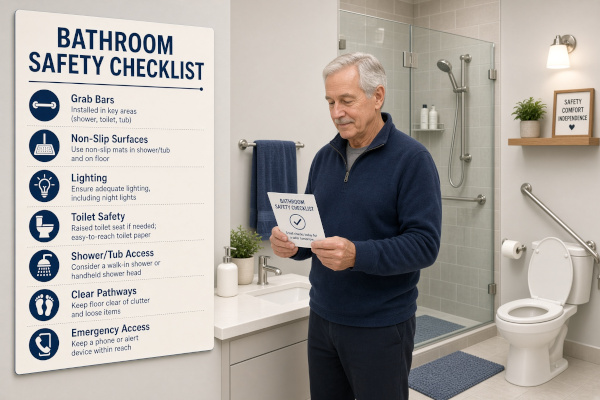
The bathroom is one of the riskiest rooms in the house. The floors get wet. You step in and out of a tub. You sit down and stand up. And you’re often in there alone, at night, half awake.
The good news: most bathroom fixes are cheap and quick. Many take less than an hour, and you don’t need a contractor for most of them.
Grab a pen. Walk into your bathroom (or your parent’s) and check these 10 things. A printable checklist is at the bottom.
1. Is there a real grab bar by the tub or shower?
A towel bar is not a grab bar. It will pull right out of the wall if you lean on it. A grab bar should be screwed into the wall studs, or mounted with anchors made for grab bars. Put one where you step in and one where you stand up. If you’re not handy, this is the one job worth paying for. See my grab bar guide.
2. Is the tub or shower floor slippery?
Wet tile and smooth tubs are slick. Use a non-slip mat inside the tub, or stick-on grip strips. Clean them often so they don’t get slimy.
3. Can you sit while you shower?
Standing on one foot to wash is a balance test you don’t need. A shower chair or tub bench lets you sit down safely. A handheld shower head makes it even easier. Read my shower chair review.
4. Is the toilet easy to get on and off?
If you push off the sink or towel bar to stand up, the toilet is too low. A raised toilet seat or toilet safety rails help a lot. See Toilet Safety Rails and Raised Seats.
5. Does the bath rug stay put?
A rug that slides is a trip waiting to happen. Use a rug with a rubber back, add rug grippers, or take the rug out.
6. Can you see at night?
Most late-night trips to the bathroom happen in the dark. Add a plug-in night light, or a motion-sensor light that turns on by itself. Light the path from the bed to the bathroom too.
7. Is the water too hot?
Older skin burns faster. Many experts suggest setting your water heater to 120°F or lower. Test the water with your hand or elbow before you step in.
8. Can you reach what you need without bending or stretching?
Keep soap, shampoo, and towels between hip and shoulder height. A shower caddy that hangs at chest level beats bottles on the floor of the tub.
9. Can you call for help from the bathroom?
If you fell in the bathroom, could you reach a phone? Keep a phone nearby, or wear a waterproof alert button. See my medical alert guide and caregiver pagers.
10. What’s on your feet?
Bare wet feet and socks on tile are both slippery. Wear non-slip socks or slippers on the way to and from the bathroom.
Printable checklist
Print this page, or copy the list onto a card and tape it inside the bathroom cabinet.
- ☐ A real grab bar by the tub or shower (not a towel bar)
- ☐ Non-slip mat or strips inside the tub
- ☐ A shower chair or tub bench
- ☐ Toilet is easy to get on and off
- ☐ Bath rug stays put, or is gone
- ☐ Night light or motion light, plus a lit path from the bed
- ☐ Water heater at 120°F or lower
- ☐ Soap and towels within easy reach
- ☐ A phone or alert button you can reach from the floor
- ☐ Non-slip socks or slippers
Download the printable checklist (PDF).
My recommendation
Don’t try to fix everything this weekend. Start with the two that matter most: a real grab bar and a non-slip surface in the tub. Then work down the list, one item a week.
If you’re helping a parent, do this walk-through together. Ask them where they feel unsteady. They’ll often point right at the problem.
This is general home-safety information, not medical advice. An occupational therapist can do a full home safety check. Ask your doctor about a referral.
Leave a Reply