

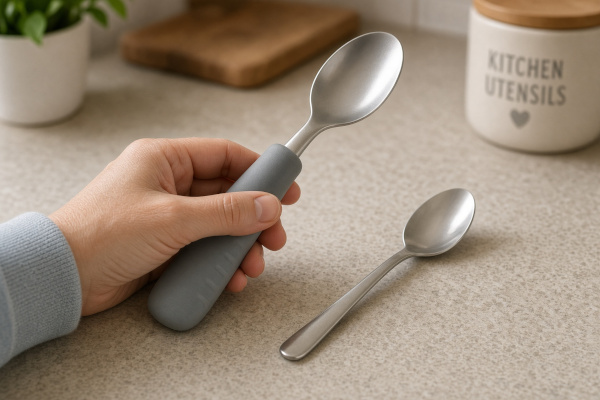
If a regular fork hurts to hold, it’s not you. It’s the handle.
Most kitchen tools are made with thin handles and sharp edges. That’s fine for strong, young hands. But if you have arthritis, weak grip, or shaky hands, a thin handle makes you squeeze harder, and squeezing is what hurts.
The fix is usually simple: a bigger handle, a better angle, or a tool that does the twisting for you. Here are the ones worth having.
At a Glance
| Tool | What it fixes | Price range |
|---|---|---|
| Built-up handle utensils | Hard to grip a fork or spoon | Low |
| Foam tubing | Same problem, for tools you already own | Very low |
| Rocker knife | Sawing back and forth hurts | Low |
| Can opener (smooth-edge or electric) | Twisting a crank is hard | Low to medium |
| Pots with two handles | Lifting a full pot with one hand | Medium |
| One-handed cutting board | Food slides while you cut | Low |
| Non-slip mat | Bowls and plates slide around | Very low |
Some links on this page are affiliate links. If you buy through them, I may earn a small commission at no extra cost to you.
Built-up handle utensils
Best for eating without hand pain
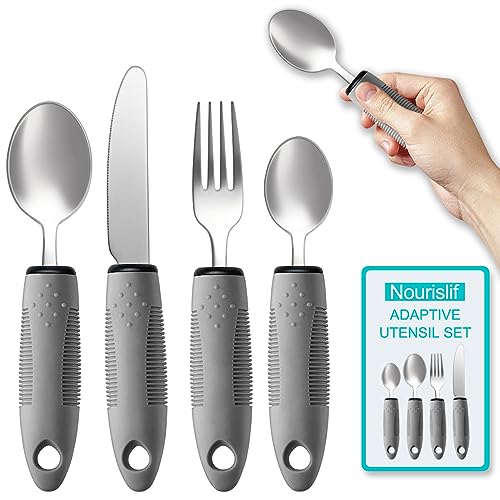

Forks, spoons, and knives with thick, soft handles. A bigger handle means you don’t have to squeeze as hard. Some also bend, so you can angle the spoon toward your mouth. Look for ones that are dishwasher safe.
Foam tubing
Best cheap fix

This is the budget option, and it works. You slide a piece of foam tube over the handle of a fork, toothbrush, pen, or vegetable peeler you already own. A pack costs a few dollars and fits a dozen tools. Try this before you buy a full set of special utensils.
Rocker knife
Best for cutting with less effort
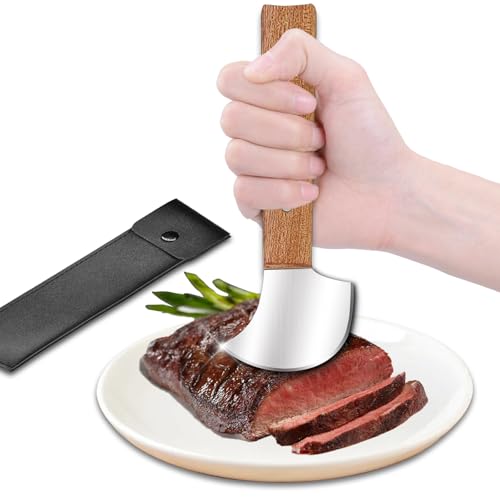
A curved blade you rock back and forth instead of sawing. You press down with your palm, not your fingers. It’s great for meat, pizza, and sandwiches. It won’t replace a bread knife for crusty bread.
Can openers that don’t fight you
Best for canned goods

I bought the OXO Good Grips smooth-edge can opener for my own kitchen. The handles are thick and soft, and the lid comes off with no sharp edge. If turning any crank hurts, an electric can opener is the next step up. You just set it on the can and press a button.
Pots with two handles
Best for safer lifting
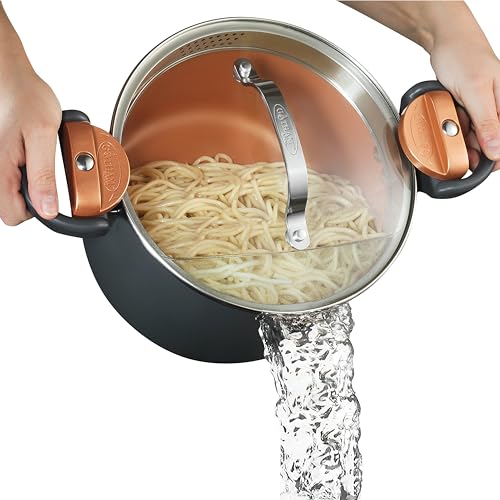
A full pot of pasta water is heavy, and lifting it with one hand is how spills and burns happen. Pots with a handle on each side let you lift with both hands. A lighter pot (like aluminum, not cast iron) helps too. If you love your current pot, a “helper handle” on the opposite side does the same job.
One-handed cutting board
Best if you can only use one hand well

These boards have raised corners and small spikes that hold food in place while you cut. They have rubber feet so the board won’t slide. They’re helpful after a stroke, a hand injury, or if one hand is much weaker than the other.
Non-slip mat
Best small fix for the whole kitchen

A thin, rubbery mat that keeps bowls, plates, and cutting boards from sliding. Cut it to size and put it under anything that moves while you stir or cut. It costs very little and helps every day.
What you can skip
- Gadgets that do one tiny job. An “egg cracker” or “banana slicer” just takes up a drawer.
- Big sets you haven’t tried. Buy one built-up spoon first and see if you like it.
- Anything heavy “for durability.” For sore hands, light beats heavy almost every time.
How to choose
- It hurts to hold things: start with foam tubing or built-up utensils
- Cutting is the hard part: rocker knife, plus a non-slip mat under the board
- One hand is weaker: one-handed cutting board and two-handled pots
- Twisting is the problem: a smooth-edge or electric can opener, plus a jar opener
- Not sure what you need: an occupational therapist can watch you cook and suggest tools. Ask your doctor for a referral.
Pros
- Less squeezing, less pain
- Most of these tools cost very little
- They help you keep cooking for yourself
- Foam tubing works on things you already own
Cons
- Built-up handles take up more drawer space
- Some “easy-grip” labels are just marketing, so check the handle size
- Electric openers need a plug or batteries
- One-handed boards have spikes, so clean them carefully
My recommendation
Start cheap. Buy a pack of foam tubing and a non-slip mat. Together they cost less than a lunch out, and they help with almost everything in the kitchen.
Then fix your hardest job first. If it’s cutting, get a rocker knife. If it’s cans, get a smooth-edge or electric opener. One good tool for your biggest problem beats a drawer full of gadgets.
Related reviews: Jar Openers for Seniors · Reacher Grabber Tools · Doorknob Lever Adapters
This is general information, not medical advice. If hand pain is new or getting worse, talk with your doctor.